


In Conversation with Faiza Hassan, Director for the Inter-agency Network for Education in Emergencies
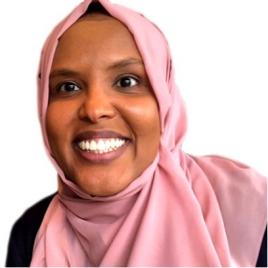
On January 13, 2025, Faiza Hassan joined the Inter-agency Network for Education in Emergencies (INEE) as its new Director. In this blog, she reflects on her personal and professional journey, highlighting the experiences that have shaped her understanding of the challenges and opportunities in Education in Emergencies (EiE). She also shares her initial thoughts on leading INEE, her vision, and key priorities for her first year in office. Finally, Faiza offers insights on the evolving global EiE landscape and what it means for the future.
 Tell us about your early life and what inspired you to work in the field of education in emergencies. How have your previous experiences shaped your understanding of the challenges and opportunities in education in emergencies?
My name is Faiza Hassan and I’m the INEE Director (I can’t believe it’s already been seven weeks!). Whilst my work in education in emergencies formally began in 2012, my journey into this sector started much earlier. I was born in Somalia, and so much of my childhood and adolescence was rooted in moving from country to country. I did my primary education in Yemen, secondary education in the Netherlands, and tertiary education in the UK. We lived in Ibb, then Dhammar in the central highlands of Yemen, before moving to Taiz. Later, we found ourselves in a small Dutch village called Markelo as asylum seekers, then we settled in Ede in central Netherlands, and eventually in Birmingham in the UK. So living in all these different places; the constant change, and adapting to new cultures and languages is what shaped my view of the world.
I think that it is this journey that has made my path into this sector not as direct or linear as others. I began my professional career in 2007 as a chemical engineer in Aberdeen, Scotland. But it was Somalia that ultimately pulled me back and that was the beginning of my formal work in the education sector. When I returned to Somalia in 2012, I found myself drawn to the education sector and volunteering to support the Go-To-School program aiming to bring children back to schools across the country. Over the past decade, it has been both professionally and personally rewarding to have worked alongside local communities, teachers, policymakers, and humanitarian actors to develop and implement education programs that not only restore learning but also serve as a lifeline for children caught in crises. I know what it means to have your education disrupted, not as an abstract policy challenge, but as a lived reality. I understand that access to learning can provide a sense of normalcy and hope, even in the most uncertain conditions. For children in conflict and crisis contexts, education is not just about the future, it is a source of stability, and survival in the present.
Throughout my work in the education sector, one challenge that often stood out to me is the disconnect between policy and reality. Too often, decisions are made far from the communities they impact. I have seen firsthand the incredible innovation that emerges when communities are given the resources and autonomy to lead their own solutions. In my opinion, INEE has a critical role to play in bridging these gaps, amplifying local voices, and ensuring that education in emergencies is shaped by those who understand most what is at stake. As I step into this role, I look forward to working with all of you to make this a reality.
You joined INEE at a difficult moment for the sector. How do you envision INEE evolving under your leadership?
While the challenges facing the sector are significant, I believe that they also present an opportunity to reimagine how we do this work. It is important to remember that long before the Geneva Convention, societies around the world had their own systems of mutual support (e.g. Christian charity, Buddhist almsgiving, Islamic Zakat, and various indigenous care traditions). These traditions remind us that humanitarianism has always been a fundamental part of human society, taking different forms across cultures. Humans have always helped each other in different ways. In my opinion, the current funding challenges that the sector is facing can serve as a catalyst for transformation. The current challenging environment can help push the global humanitarian system to evolve beyond its traditional Global North dominance and to embrace a more diverse and inclusive ecosystem. However, this shift won’t happen on its own and will require our collective effort and intentional action to make it a reality. I look forward to INEE playing a key role in creating the spaces needed and convening actors together to have these critical discussions and drive this change forward.
INEE is more than a network: it is a space where education actors come together because they believe in a shared responsibility to protect learning in crisis settings. Leading this community is both a privilege and a responsibility. I’m excited about the potential to push the boundaries of what is possible and to drive meaningful impact in education in emergencies. INEE has a powerful legacy to build on, and an incredible team of committed and passionate individuals working in the INEE Secretariat, INEE Steering Group, and as part of our wider membership. Even in the current difficult global environment, there is a real opportunity to take our work to the next level. To do this, we will have a sharper focus on what we can offer as a Secretariat and as a network and how we can drive change where it matters most, at the country level.
I want to deepen INEE’s engagement with Ministries of Education, national clusters, local organizations, and educators on the ground, so that our work reflects lived realities. I envision an INEE that is more responsive, inclusive, and a strong driver of systemic change. An INEE that evolves in favour of a more localized approach. There are already strong examples of this work in action within INEE. The INEE Accelerated Education Working Group (AEWG) is providing technical support to education stakeholders in the State of Palestine helping to plan for a return to learning in Gaza and ensuring education continuity in the West Bank. Similarly, the INEE’s technical team has collaborated at the regional and country levels to integrate the INEE Minimum Standards into planning, implementation and monitoring processes. Ecuador’s Ministry of Education used the Minimum Standards to develop its DDR education policy, while Colombia’s Ministry of Education incorporated the Minimum Standards definition of EiE in the development of its EiE policy, and the Latin America and Caribbean Working Group mainstreamed it into its work plan. In addition, the INEE’s Data and Evidence team has convened key actors working on issues of EiE data and evidence including Ministries of Education and Country Cluster Coordinators to develop a common vision for strengthening the data and evidence ecosystem. This forthcoming Action Agenda will serve as a foundation to align system strengthening and ensure that the plurality of voices in the data and evidence space, and most importantly those working in crisis contexts, lead the vision and implementation for data and evidence strengthening. By deepening this work across INEE and building on these successes, we will continue to strengthen our impact at the regional and country level ensuring that EiE is guided by strong technical standards.
What key priorities will you focus on in your first year as director to navigate the complex global environment?
During my first year, the focus will be on the following:
- Leveraging our global network to drive meaningful impact in a sustainable way that reduces the current over-reliance on international actors in education in emergencies.
- Strengthening INEE’s role as a catalyst for change and ensuring that our convenings lead to real-world impact at the country level.
- Centering localization in our approach and ensuring that those most affected by crises shape the policies and strategies meant to serve them.
- Bridging the policy-practice divide by amplifying local leadership and community-driven solutions.
- Deepening collaboration across sectors, recognizing that education in emergencies does not exist in isolation from child protection, social services, and economic recovery.
- Leveraging partnerships and collaboration with all the key actors in EiE to pool our resources together and maximize our impact, especially in the current global funding environment.
- Strengthening joint advocacy efforts to ensure that education in emergencies remains a global priority and mobilizing long term commitment for crisis affected learners.
INEE has recently undergone a significant restructuring at a time when the education in emergencies sector is facing increasing financial constraints. How do these changes position INEE to navigate and respond to the evolving funding landscape?
INEE has undergone two organizational restructurings that built on each other. The first restructuring was completed in December 2024, followed by one completed in February 2025. The overall objective was to ensure that INEE is fit for purpose in a changing global landscape. A key consideration was our need to be more responsive to the current financial realities facing the sector. In concrete terms, the restructuring removed layers within the organization and merged different teams. This will allow us to be more agile, and better prepared for the funding constraints affecting our entire sector. This will also mean that INEE will have a much more focused approach on what we can offer and will prioritize efforts that have the greatest impact and are aligned with our mission. I am also viewing this as an opportunity to reimagine how the Secretariat team engages with the wider network.
Overall, this is a critical moment, not just for INEE, but for the entire humanitarian and development sectors. The challenges are immense, but so are the opportunities. The recent broad reductions in humanitarian funding are reminders that we can no longer rely on traditional financing models to sustain our work. At a time when the needs are growing, driven by protracted conflicts, climate-induced displacement, and instability, funding is shrinking. This reality demands that we rethink how we operate, how we mobilize resources, and what impact we seek to achieve.
What message would you like to share with INEE members as you settle into your role?
As we step into this next phase for INEE, I invite you to join me in pushing boundaries, questioning old ways of working, and committing to education that is not just accessible but transformative. Together, we can re-imagine the education in emergencies sector, and we can critically examine our own internal structures, questioning whose knowledge we prioritize and whose voices dominate global EiE conversations. These are challenging times for the entire sector, but I remain hopeful about what we can achieve together. I am also hopeful that we can use this challenging moment to reform the humanitarian system in a meaningful way. I look forward to serving in this role and working alongside all of you.