


Can Distance Education be Truly Inclusive?
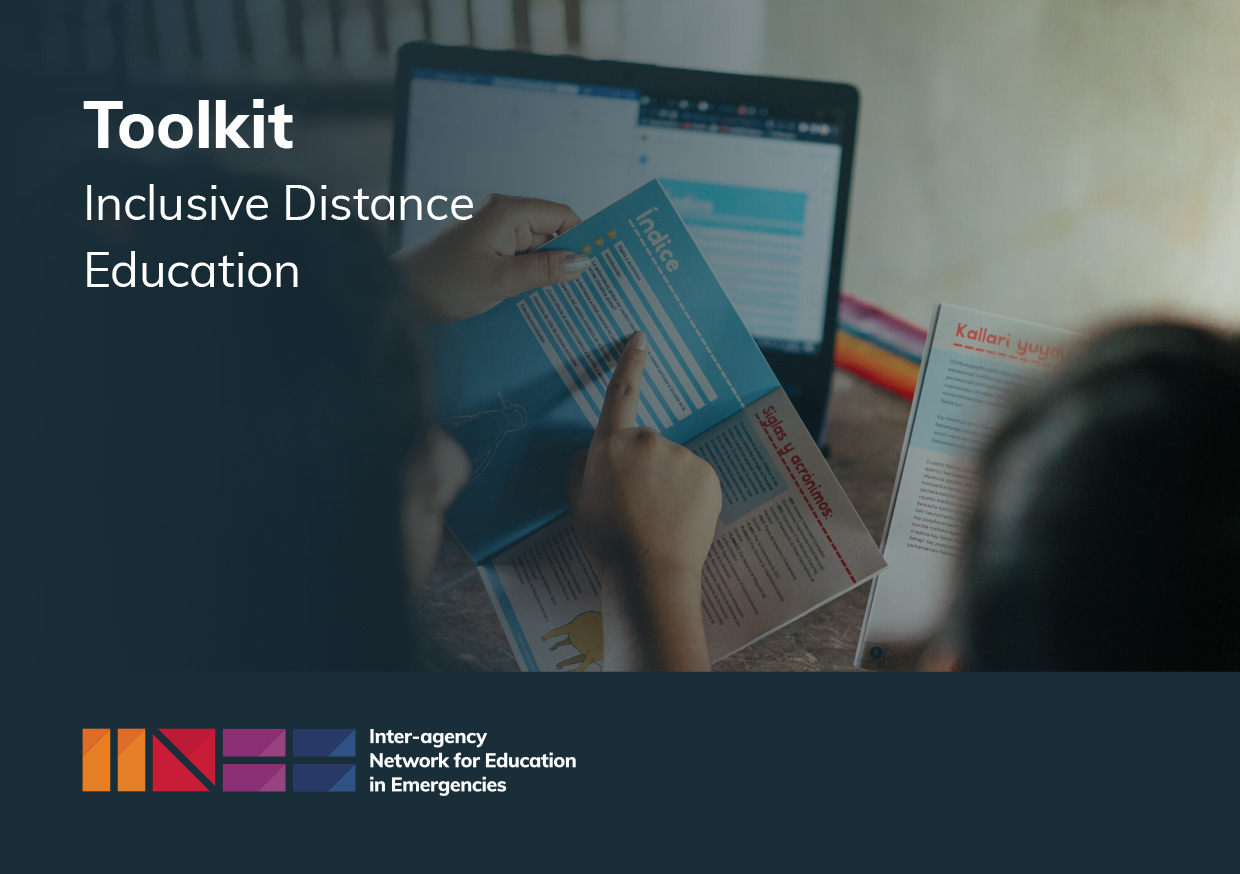 In July 2023, INEE launched an important resource for our community: the Inclusive Distance Education Toolkit.
Building on the INEE Background Paper on Distance Education in Emergencies, and as a response to the need in emergency and crisis-affected contexts to shift to distance education, this toolkit provides a host of resources on inclusive education, education in emergencies, disability inclusive education, and distance education across the humanitarian-development nexus.
The toolkit was designed for education practitioners working in emergencies and crisis-affected contexts - for local, regional, and global decision-makers, program staff, and professionals who support the design, implementation, and evaluation of distance education programs.
The resources are wide-ranging, from policy to pedagogy and implementation in crisis-affected contexts. There is also practical guidance, training, and printable materials for those working on the ground.
When thinking more deeply about inclusion and exchanging experiences among practitioners about how to operationalize distance learning opportunities for children affected by crises, a key question arises: can distance education be truly inclusive, especially when delivered amid emergencies and crises?
Caregiver Support:
Capacity building and training of caregivers is vital to the process of giving access to distance learning to students with disabilities and other vulnerable children in emergencies and protracted crises. Caregivers would have widely variable and potentially limited ability to implement or support their children in attending or participating in distance learning. Humanitarian practitioners need targeted training to support caregivers in this challenging environment.
Curriculum Adaptations
Inclusion practices for children with significant support needs in distance learning typically require curriculum adaptations to integrate trauma informed care and mental health interventions. Practitioners would need to balance these important MHPSS considerations with the existing academic content and daily life activities.
Cultural Stigma
There are cultural considerations that hinder access to education for children with disabilities. Many families, for a variety of reasons, are unwilling to send their children with disabilities to school or even see the benefit in engaging in educational opportunities. Moreover, prejudices and stereotypes on the condition and rights of children with disabilities, that may be common among students, teachers and communities in general, prevent schools from being inclusive learning environments. In addition, the intersectionality of gender and disability must be considered and addressed in activities planning and response.
Policy and Practice:
Improving policies and practice is a good place to start, but policies must be actionable and aligned with needs on the ground. This would need to be implemented and adapted at the local level to address the realities of an emergency or crisis. In addition, materials need to be adaptable and flexible to fit these specific environments. This could involve setting up temporary classrooms or learning hubs that are specifically designed to be inclusive for children with disabilities, with a blend of in-person support from teachers and mental health professionals alongside distance education.
Your voice matters! Share your insights and best practices related to these important questions through this feedback form and contribute to an enriching follow-up webinar discussion. Together, we can strengthen equitable access to inclusive education for the most vulnerable children and families living in and impacted by extreme circumstances. Your input can make a real difference - Join the conversation!
Authors:
Elena Modolo, Global Education Expert at WeWorld (member of ChildFund Alliance), is based in Italy and is responsible for providing technical assistance to WeWorlds Country Offices. She holds a Bachelor’s Degree in Philosophy and a Master’s Degree in International Development Cooperation.
Kristen Kaiser, Leadership and Education in Neurodevelopmental Disabilities Expert at A Global Voice for Autism, is based in the United States and is responsible for providing technical assistance, training and advocacy to humanitarian organizations, key community stakeholders, families and children. She holds a Bachelors and Masters degree in English Literature and a Masters in Public Health with a concentration on Maternal and Child Health.
The views expressed in this blog are the authors' own.